

Application Development

Applications that customers actually want to use.

Web, mobile, and hybrid applications built around real users. Product discovery, UX, engineering, and post-launch iteration under one roof — the same team from concept to retention.
Since 20171,200+ projects deliveredUAE-based team · Sharjah HQ · Working across GCC + wider MENA
Applications that customers actually want to use.
Capabilities

What we build.

Every engagement is scoped to your specific stack and roadmap — no cookie-cutter templates, no generic listicles.

  1. Product discovery

    01

    User interviews, jobs-to-be-done, opportunity mapping. We start with the customer problem, not the tech stack.

  2. UX + product design

    02

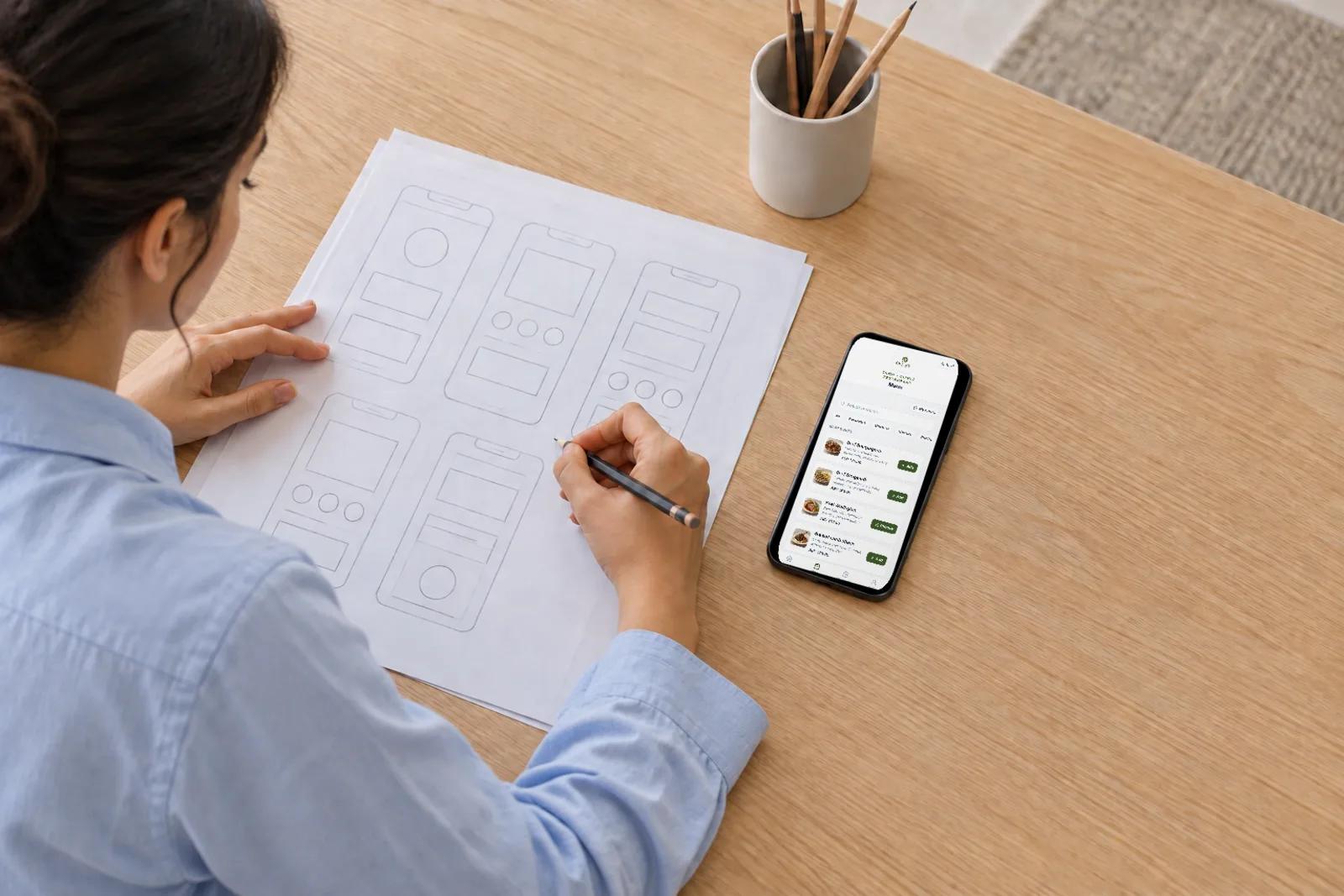
    Wireframes, prototypes, design tokens. Every screen tested with real users before the first line of production code.

  3. Web applications

    03

    React + Next.js apps with SSR/ISR, real-time features, offline-first sync where the use case demands it.

  4. Cross-platform mobile

    04

    React Native, Flutter, Capacitor. One codebase, two stores, when time-to-market matters more than platform-only polish.

  5. Launch strategy

    05

    App-store optimisation, phased rollouts, feature flags, A/B testing. Ship day one is a milestone, not the finish line.

  6. Analytics + telemetry

    06

    Product analytics wired at the schema level — event names, funnels, retention cohorts. Not a Google Analytics afterthought.

  7. Customer feedback loops

    07

    In-app feedback widgets, session replay, NPS, roadmap voting — the surfaces you need to hear what customers actually think.

  8. Iterate + retain

    08

    Quarterly retention reviews, cohort analysis, feature deprecation. We stay involved after launch because that's when the real product ships.

Our process

Start to finish, step by step.

7 steps from the first conversation to life after launch. Durations are typical; your plan sets the real ones.

How we run every project
  1. Step 1: Discover

    Interview users, map the jobs-to-be-done and prioritise the smallest thing that proves value.

    • You get: Evidence-based MVP scope
    • Typical duration: 1–2 weeks
  2. Step 2: Scope & estimate

    The MVP turned into a release plan with milestones, priced as fixed scope or time and materials, whichever suits how settled the idea is.

    • You get: Release plan and estimate
    • Typical duration: About 1 week
  3. Step 3: Prototype & user tests

    Figma prototypes tested against real users before build, plus a design token file so future engineers extend the visual language instead of reinventing it.

    • You get: Tested prototype and design tokens
    • Typical duration: 2–4 weeks
  4. Step 4: Build in sprints

    Demos on staging every sprint, feature flags for progressive rollout and a CI pipeline that blocks regressions.

    • You get: Working product every sprint
    • Typical duration: 6–14 weeks
  5. Step 5: Beta with real users

    A limited release to a group of real users with analytics and feedback in place, then fixes and polish.

    • You get: Beta feedback and fixes
    • Typical duration: 2–4 weeks
  6. Step 6: Public launch

    Public launch when the beta numbers say so, with monitoring, analytics and support ready on day one.

    • You get: Live product
    • Typical duration: About 1 week
  7. Step 7: Iterate

    Post-launch analytics review at day 30, 90 and 180. Roadmap adjusted based on real behaviour, not opinion.

    • You get: Roadmap from real usage
    • Typical duration: Ongoing

Common questions

Start a project

01What is the difference between application development and software development?
We use "application development" for products aimed at end users (customers, employees, partners) — where UX, retention, and the mobile experience matter most. "Software development" is our label for infrastructure, integrations, SaaS platforms, and back-office systems where the buyer is often the same as the user. Both use the same engineering team; the difference is the design and research effort we put in up front.
02Web app vs mobile app — how do we decide?
If your users open the product 3+ times a day, want offline access, use hardware (camera, GPS, NFC), or want push notifications — mobile is worth the extra cost. If usage is once a week or less and desktop-heavy, ship a great responsive web app first and add mobile after you have paying customers. We help you make this call in discovery.
03React Native, Flutter, or native?
React Native for teams already fluent in React and where 90% of the app is UI/data. Flutter when you need pixel-identical UI on both stores. Native Swift/Kotlin when hardware access, background sync, or platform-specific polish is a business requirement. We ship all three and will recommend the honest fit, not the one we're selling.
04How do you handle app-store submission + review?
We handle full submission on Apple App Store + Google Play under your developer accounts. First-time approval typically takes 3-10 days on iOS, 2-5 days on Android. Rejections (usually IAP or content policy) are fixed and resubmitted within one business day at no extra cost.
05Do you support Arabic + RTL?
Yes. We build Arabic-first, not translated-mirror. Layouts use logical CSS properties (`ms-*` / `me-*`), typography swaps to Arabic-optimised faces, and content is reviewed by native Arabic speakers before ship. Bilingual is a first-class capability, not an afterthought.
06Can you ship an MVP in 60 days?
Yes if the scope is honest. A single-user-role app with one core screen and 3-4 supporting screens is achievable in 6-9 weeks. Anything with multi-tenant, payments, in-app messaging, or offline sync needs 12+ weeks to ship without shortcuts we'll regret.
07What happens after launch?
We stay involved through a monthly retainer or move to on-demand support. Either way you own the code, deployments, and store accounts — support is a service, not a lock-in.
A business owner writing a software project brief at a desk
Free template · PDF

Software Project Brief Template

A 3-page, fill-in brief that gets you a sharper estimate from any developer.

  • 3-page PDF
  • About 45 minutes
  • Print or fill on screen

Ready to start?

15-minute scoping call, written proposal within one business day. No pushy sales.

Not ready to talk yet? Plan your requirements in 2 minutes with our free project requirements planner.